For decades, the path to a good career seemed obvious: finish school, get into a reputable university, earn a degree, and the job offers would follow. In 2026, that path is no longer the only one — and for many students, it isn’t even the most financially sensible one. The rise of high-quality online courses, industry certifications, and skill-based learning platforms has created a genuine alternative to the traditional four-year degree, and increasingly, the decision between the two comes down to a question that sounds almost unromantic for something as personal as education: which option offers a better return on investment?
This article breaks down how to actually think about that comparison — not with vague encouragement toward either path, but with a practical framework for weighing cost, time, earning potential, and career outcomes.
Why ROI Has Become the Right Lens for This Decision
Education was traditionally evaluated in terms of prestige, personal growth, or long-term career stability, and those factors still matter. But tuition costs have risen sharply over the past two decades, often outpacing inflation and wage growth, while the job market has simultaneously shifted toward valuing demonstrable skills over credentials alone. In many industries — particularly technology, design, marketing, and digital trades — employers increasingly care more about what a candidate can actually do than which institution issued their diploma.
This shift means students today are making a financial decision as much as an academic one. A degree that costs a significant sum and takes four years to complete needs to be evaluated against alternatives that might cost a fraction of that and take a fraction of the time, if the end goal is simply employability and income.
Breaking Down the Real Costs
Traditional Degree Costs
A traditional degree’s cost extends well beyond tuition. Students need to account for accommodation, books, transportation, and daily living expenses across the full duration of the program. For many, this also includes the opportunity cost of not earning a full-time income during those years — money that could have been saved, invested, or used to gain work experience instead.
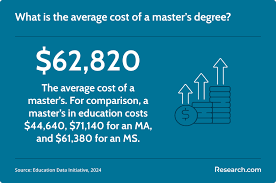
Education loans add another layer to this calculation. Loan interest accumulates over the repayment period, meaning the effective cost of a degree is often considerably higher than the sticker price once interest is factored in. Graduates frequently spend years, sometimes a decade or more, paying down this debt, which delays other financial milestones like buying a home or building savings.
Online Course Costs
Online courses and certification programs, by contrast, are usually priced per course or per program, often ranging from a small one-time fee to a few hundred dollars for comprehensive, specialized tracks. Some platforms offer subscription models, granting access to multiple courses for a flat monthly fee, which can be extremely cost-effective for motivated, self-directed learners who complete several courses in a short period.
Crucially, the time investment is also dramatically lower. Many career-relevant skills — coding bootcamps, digital marketing certifications, data analysis courses — can be completed in a matter of months rather than years, allowing students to enter the workforce and start earning much sooner.
Comparing Earning Potential
This is where the picture becomes more nuanced, and where blanket statements in either direction tend to mislead.
Traditional degrees, particularly in regulated professions like medicine, law, engineering, or academia, remain essential — there is simply no substitute, since these fields require formal credentials by law or professional standard. In these cases, the ROI conversation isn’t really about whether to get a degree, but about managing its cost efficiently.
For many other fields, though, particularly in tech and digital industries, the earning potential of self-taught or certification-trained professionals has become genuinely competitive with degree holders, especially in the first several years of a career. Employers in these industries increasingly run skills-based assessments during hiring, which means a portfolio of real projects from an online course can carry as much weight as a transcript.
That said, traditional degrees often retain an advantage in long-term career ceiling, particularly for roles requiring formal credentials for promotion into senior leadership, or in industries where degree requirements are deeply embedded in hiring practices, even if not strictly necessary for the actual work.
Building a Simple ROI Framework
To make this comparison concrete, it helps to think in terms of four core inputs: total cost, total time to completion, expected starting salary in the target field, and the rate at which loans (if any) need to be repaid.
A simplified way to estimate ROI is to calculate the “breakeven point” — the amount of time it takes for the income earned from a chosen path to fully offset its total cost. A traditional degree with significant loan debt might have a breakeven point of several years post-graduation, once loan repayments and the lost income from years not spent working are factored in. A shorter, lower-cost online certification, paired with an entry-level job in the relevant field, might reach breakeven within the first year of employment, simply because the upfront cost was so much lower and earning began so much earlier.
It’s worth noting that this framework doesn’t account for everything — career advancement speed, job security, and personal satisfaction all matter too, and these are harder to quantify. But as a starting point for comparing pure financial outcomes, the breakeven approach gives students a tangible number to work with rather than relying on assumptions.
Factors That Shift the Calculation
Field of Study
The ROI comparison looks very different depending on the career path. Fields with strong licensing or credentialing requirements — healthcare, law, accounting in many jurisdictions — leave little room for online alternatives to fully substitute for a degree. Fields built around demonstrable digital skills — software development, UX design, digital marketing, content creation — offer much more flexibility, with online learning paths increasingly accepted as legitimate entry points.
Networking and Soft Skills
Traditional university environments offer structured opportunities for networking, mentorship, and the kind of soft-skill development that comes from sustained, in-person group work — things that are harder, though not impossible, to replicate in a purely online learning environment. Students choosing the online path should be intentional about building these skills elsewhere, through internships, freelance work, or community involvement in their target industry.
Employer Perception
While many industries have grown more skills-focused, employer perception still varies significantly by company size, industry, and region. Larger, more traditional organizations may still favor degree holders for certain roles, while startups and tech-forward companies are often more willing to evaluate candidates on demonstrated ability alone. Students should research hiring norms in their specific target industry and region before assuming either path is universally favored.
Hybrid Approaches
It’s worth noting that this decision isn’t strictly binary. A growing number of students pursue a hybrid strategy — completing a degree in a foundational or broadly applicable field while supplementing it with targeted online certifications in specific, high-demand skills. This approach can offer the credibility of a formal degree alongside the practical, current skills that online courses tend to deliver faster than traditional curricula, which often lag behind industry trends.
Risks Worth Considering
Choosing the online-only path carries its own risks that shouldn’t be glossed over. Without the structure and accountability of a formal program, completion rates for online courses are historically lower, requiring genuine self-discipline to see through. The quality of online programs also varies enormously — some certifications are highly respected within their industries, while others carry little real recognition, making it important to research a program’s actual standing with employers before investing time and money into it.
On the other side, committing to a traditional degree without a clear sense of the target career path carries its own financial risk, particularly if it leads to significant debt for a field with limited job prospects relative to the cost of entry. The ROI framework discussed above is most useful precisely in catching this kind of mismatch before a large financial commitment is made.
Practical Steps for Students Weighing This Decision
Before committing to either path, it’s worth researching actual hiring requirements in the specific career field of interest — not assumptions, but real job postings and conversations with people currently working in that field, since requirements can vary more than expected even within the same general industry.
It also helps to calculate the realistic total cost of each option, including hidden costs like loan interest or lost income, rather than just comparing tuition or course fees at face value, since the headline price rarely tells the full financial story.
For students leaning toward the online path, prioritizing programs with strong industry recognition and built-in project work is far more valuable than simply collecting certificates, since employers generally care more about demonstrated capability than the certificate itself.
Finally, students should remember that this decision doesn’t have to be permanent or exclusive. Career paths today are rarely linear, and many professionals continue blending formal education with ongoing online learning throughout their careers, adjusting their skills as industries evolve.
Conclusion
The choice between online courses and a traditional degree is no longer a question with one universally correct answer — it depends heavily on the target career field, the student’s financial situation, and how much value they place on the non-financial benefits of a traditional university experience. What has changed in 2026 is that this decision can now be approached with real financial rigor, using ROI as a practical framework rather than relying purely on tradition or assumption.
For students willing to do the research — comparing actual costs, realistic timelines, and genuine industry hiring practices — this analysis can prevent costly missteps and help direct limited time and money toward the path most likely to deliver a strong return, however that return is ultimately defined for them.